Stress and polyvagal theory
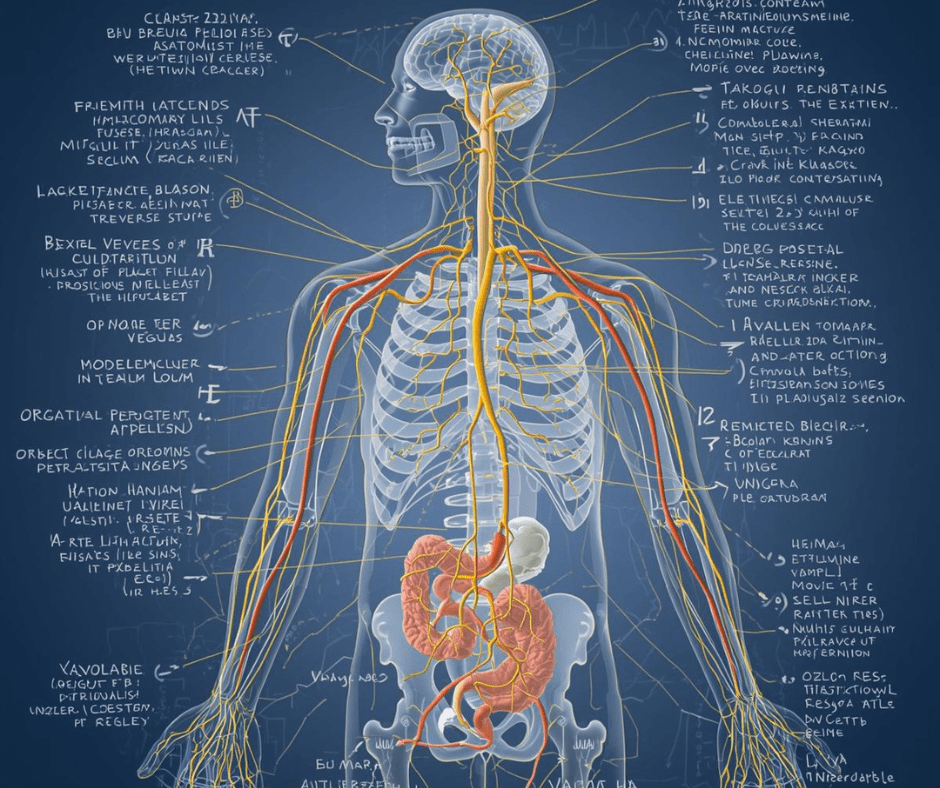
Stress is not just in your head. It is your whole nervous system trying to keep you safe, often with strategies that were useful once, but are no longer helping today.
The polyvagal theory gives us a new, compassionate way to understand why we react the way we do, and how we can gently guide our body back to safety and connection.
From “fight or flight” to a richer map
Traditionally, we were taught that the autonomic nervous system has two main modes:
- Sympathetic: “fight or flight”
- Parasympathetic: “rest and digest”
Polyvagal theory, developed by Stephen Porges, shows that this is too simple. It describes three main states instead of two, all governed by your autonomic nervous system and especially the vagus nerve. These states are not “good” or “bad”; they are survival strategies.
The three states of the nervous system
Ventral vagal: connection and safety (green zone)
This is the state where the ventral branch of the vagus nerve is active.
Signs of this state:
- You feel calm, grounded and basically safe.
- Your heart rate is stable, your breath is smooth, your mind is clear.
- You can relate to others, feel empathy, be creative, curious and playful.
In this state, your body receives the message: “It’s safe enough to rest, digest, think, learn and connect.” This is the state in which healing, growth and healthy relationships become possible.
Sympathetic: fight or flight (red zone)
When your system detects a threat, it shifts into sympathetic activation.
What this can look or feel like:
- Faster heartbeat, shallow breathing, muscle tension.
- Feeling anxious, restless, on edge or angry.
- Urge to react: escape, fix, argue, defend yourself, attack or run.
This is your body trying to protect you by giving you energy and focus to deal with danger. It is not a mistake; it is a survival response. The problem is when this state is triggered all the time by emails, conflicts, worries and unresolved stress.
Dorsal vagal: shutdown and collapse (black zone)
If the threat feels too big, too long or impossible to escape, the body can move into a third state: dorsal vagal shutdown.
How this might show up:
- Feeling numb, empty, frozen, “far away” or disconnected from yourself and others.
- Very low energy, difficulty getting started, “I don’t care anymore”.
- Wanting to hide, isolate, stay in bed, disappear.
This is the most primitive survival response: if you cannot fight or run, your system tries to protect you by slowing everything down, disconnecting you from overwhelming pain or fear. It is not laziness or weakness, it is biology.
Your nervous system is always scanning for safety
Your autonomic nervous system constantly asks: “Am I safe, or in danger?” Based on the answer, it automatically shifts between the three states:
- When you feel safe enough
Your ventral vagal system leads. You are present, connected, able to listen, learn and relate. Life feels manageable. - When you sense danger
Your sympathetic system activates. Your body prepares to react: heart races, muscles tense, focus narrows. You go into fight or flight. - When the danger feels extreme or never-ending
Your dorsal vagal system takes over. Your body “shuts down” to protect you: slowing, numbing, disconnecting. You may feel stuck, frozen or hopeless.
These shifts often happen outside of conscious control. You are not choosing to be “anxious”, “reactive” or “numb”, your nervous system is doing its best with the information it has.
Chronic stress, trauma and “learned” shutdown
When stress or trauma is chronic, the nervous system can start to “live” in sympathetic activation or dorsal shutdown. Over time, these states become the default.
In dorsal shutdown, in particular:
- The body is in deep low-power mode, with low energy and shallow breathing, which makes it hard to re-engage.
- Social and emotional systems are inhibited, so you may feel isolated and unable to connect, even if you actually want closeness.
- The nervous system stays on alert, sometimes interpreting safe situations as dangerous.
- The body learns that shutting down is the safest option, so it returns there again and again.
This is why getting out of freeze or long-term stress is not just about “positive thinking”. Your body needs to experience safety again.
Healing from the bottom up
Polyvagal theory suggests that healing is “bottom–up”: we work with the body to send signals of safety back to the brain. Over time, this helps the ventral vagal system become active more often.
Supportive practices can include, for example:
- Gentle movement, walking, stretching, yoga, shaking.
- Slow, soft, rhythmic breathing.
- Safe connection with others: eye contact, warm voice, being truly listened to.,Soothing sensory input: touch, warmth, pleasant smells, calming sounds.
- Practices that bring you into the present moment: mindfulness, grounding, orienting to the room.
The goal is not to avoid sympathetic or dorsal states forever, they are part of being human. The goal is flexibility: being able to move back into connection and safety after stress, instead of staying stuck.
A kinder way to see yourself
Understanding stress through polyvagal theory changes the question from “What is wrong with me?” to “What is my nervous system trying to do for me right now?”
When you notice yourself in:
- Fight or flight, you can say: “My body is trying to protect me from a danger it perceives.”
- Shutdown, you can say: “My system feels overwhelmed and is trying to keep me safe by switching off.”
From this place of compassion, you can gently offer your body new experiences of safety. With regular practice, your nervous system can learn to regulate again, become more resilient and reconnect to yourself, to others and to life.
How my practices support nervous system regulation
These tools accompany exactly this regulation process, working “bottom-up” on the body and nervous system.
How naturopathy can support your nervous system
Through naturopathy, you look at the whole person: body, emotions, lifestyle and environment.
Nutritional support, herbal remedies, sleep and lifestyle adjustments can:
- Stabilize energy and blood sugar, reducing the background “alarm” in the body.
- Support adrenal and nervous system health, making it easier to move out of chronic fight–or–flight.
- Create daily routines that send repeated signals of safety and predictability to the nervous system.
When the body is nourished and supported, it is easier for the ventral vagal system to come online and for healing to happen.
How Reiki helps the body feel safe again
Reiki works with subtle energy to bring more balance and coherence into the system.
In terms of polyvagal theory, Reiki sessions can:
- Invite the body into a state of deep relaxation, shifting from sympathetic activation toward ventral vagal calm.
- Help release stored tension and emotional charge that keep the system “on alert”.
- Offer a safe, held space where the body can experience stillness and connection at the same time.
For many people, this is one of the first times they feel both deeply relaxed and emotionally safe, an important experience for a nervous system that has learned to live in stress.
How Shiatsu calms and reorients the nervous system
Shiatsu uses touch, pressure and stretching along the meridians to support the flow of vital energy.
From a polyvagal perspective, this can:
- Regulate muscle tone and breathing, helping the body shift out of hypervigilance or collapse.
- Provide rhythmic, mindful touch, which is a powerful cue of safety for the social nervous system.
- Help you feel more grounded in your body, rather than stuck in anxious thoughts or dissociation.
The combination of physical touch and presence sends a clear message to the nervous system: “You are here, you are supported, you are not alone.”
How EFT helps release old threat patterns
EFT (Emotional Freedom Techniques) combines gentle tapping on acupressure points with conscious awareness of thoughts and emotions.
This practice can:
- Reduce the emotional intensity of memories and triggers that keep the system in chronic fight, flight or freeze.
- Help the brain update its “danger map”, so that past experiences stop being read as present threats.
- Build new associations: while you feel and name your stress or fear, you also tap and breathe, giving the body a new experience of safety in the middle of difficult emotions.
Over time, EFT helps the nervous system become more flexible: you can feel, express and release without being overwhelmed or shutting down.
Bringing it all together
When you combine different disciplines, you are working with the nervous system on multiple levels at once:
- Supporting the body physically,
- Calming and balancing the energy,
- Soothing the system through safe touch,
- Updating emotional and cognitive patterns linked to threat.
Step by step, your nervous system can move more often into ventral vagal connection, spend less time stuck in fight/flight or shutdown, and rediscover a felt sense of safety, presence and openness to life.
When your nervous system is in shutdown: why a consistent journey is needed
When your nervous system is in shutdown (dorsal vagal state), it’s like being in deep energy-saving mode to protect you. A single session rarely reverses a pattern built up over time.
Here’s why a consistent journey is needed:
- Shutdown is a learned response: Your body has learned that “switching off” is the safest way to survive. This wiring doesn’t unwind in one hour.
- Energy is critically low: Vital force, motivation and body awareness are depleted. The system first needs to rebuild a baseline of charge and trust before real shifts happen.
- Safety perception is impaired: Even objectively safe situations can feel threatening. Only repeated experiences of safety (relational, physical, energetic) help the system trust again.
- The body moves in small steps: Trying to exit shutdown too quickly can feel overwhelming and trigger a rebound. Gentle, gradual, repeated inputs are essential.
- Regulation is like training a muscle: Your nervous system needs practice to fluidly shift from shutdown to presence without slipping back.
A sustained path makes the difference
Ongoing support through practices allows you to:
- Build a more stable physical foundation,
- Gradually increase the felt sense of safety,
- Integrate emotions step by step,
- Give your system the time it needs to “relearn” the path back to connection.